FlexWash processes payments through Adyen, which automatically fetches and
stores network tokens on behalf of our customers. These tokens operate at the
card network level (Visa, Mastercard) rather than the processor level, giving
car washes two concrete advantages: lower interchange costs and fewer
failed recurring charges.
What Is a Network Token
A network token is a card credential issued directly by the card network. Unlike
a standard processor token, which is tied to a specific gateway or acquirer, a
network token is maintained by the network itself and stays current even when the
underlying card is replaced, reissued, or expires.
When a customer adds a card at your wash, Adyen requests a network token from
the issuing network. That token is what FlexWash stores and uses for all future
charges.
Lower Interchange Fees
Card networks incentivize merchants to use network tokens by offering reduced
interchange rates on qualifying transactions. Because the token is
network-verified, issuers treat these transactions as lower risk, which
translates directly to lower per-transaction costs.
FlexWash handles this automatically and passes the savings on to you.
Reduced Involuntary Churn
Involuntary churn occurs when a membership charge fails because the card on file
is no longer valid. Common causes include card expiration, a lost or stolen card
replacement, or a bank-initiated reissue.
Network tokens help reduce involuntary churn because the token lives at the network level.
It remains valid across card replacements. When a customer’s bank issues a new
card number, the network updates the token behind the scenes. FlexWash continues
to charge the membership successfully without the customer needing to update
their payment method.
This keeps your members active and your recurring revenue intact.
We have seen significantly lower involuntary churn across many sites. Reach
out to sales for more information.
Card Number Differences in Reports
Because network tokens are separate credentials from the physical card, the last
four digits stored in FlexWash may not match the digits printed on the
customer’s card.
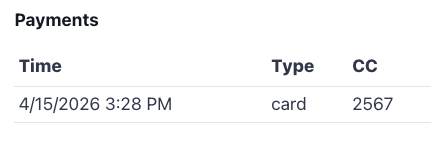
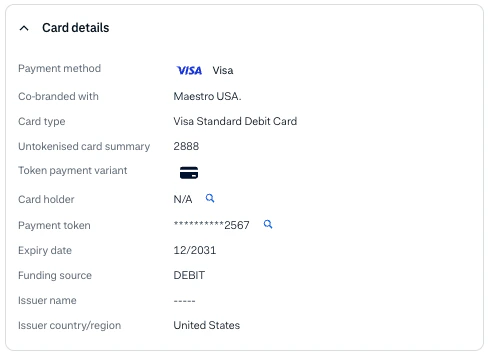
For example, a customer pays with a card ending in 2888. Adyen fetches a
network token for that card, which ends in 2567. FlexWash stores and charges
the network token, so your transaction reports show 2567.
 This is expected behavior. The network token is linked to the same account and
cardholder, but it carries its own number. If a customer or staff member notices
a mismatch between the physical card and what appears in reports, the network
token is the reason.
This is expected behavior. The network token is linked to the same account and
cardholder, but it carries its own number. If a customer or staff member notices
a mismatch between the physical card and what appears in reports, the network
token is the reason.
 No action is required. The charge is valid, authorized, and routed to the
correct account.
No action is required. The charge is valid, authorized, and routed to the
correct account.