
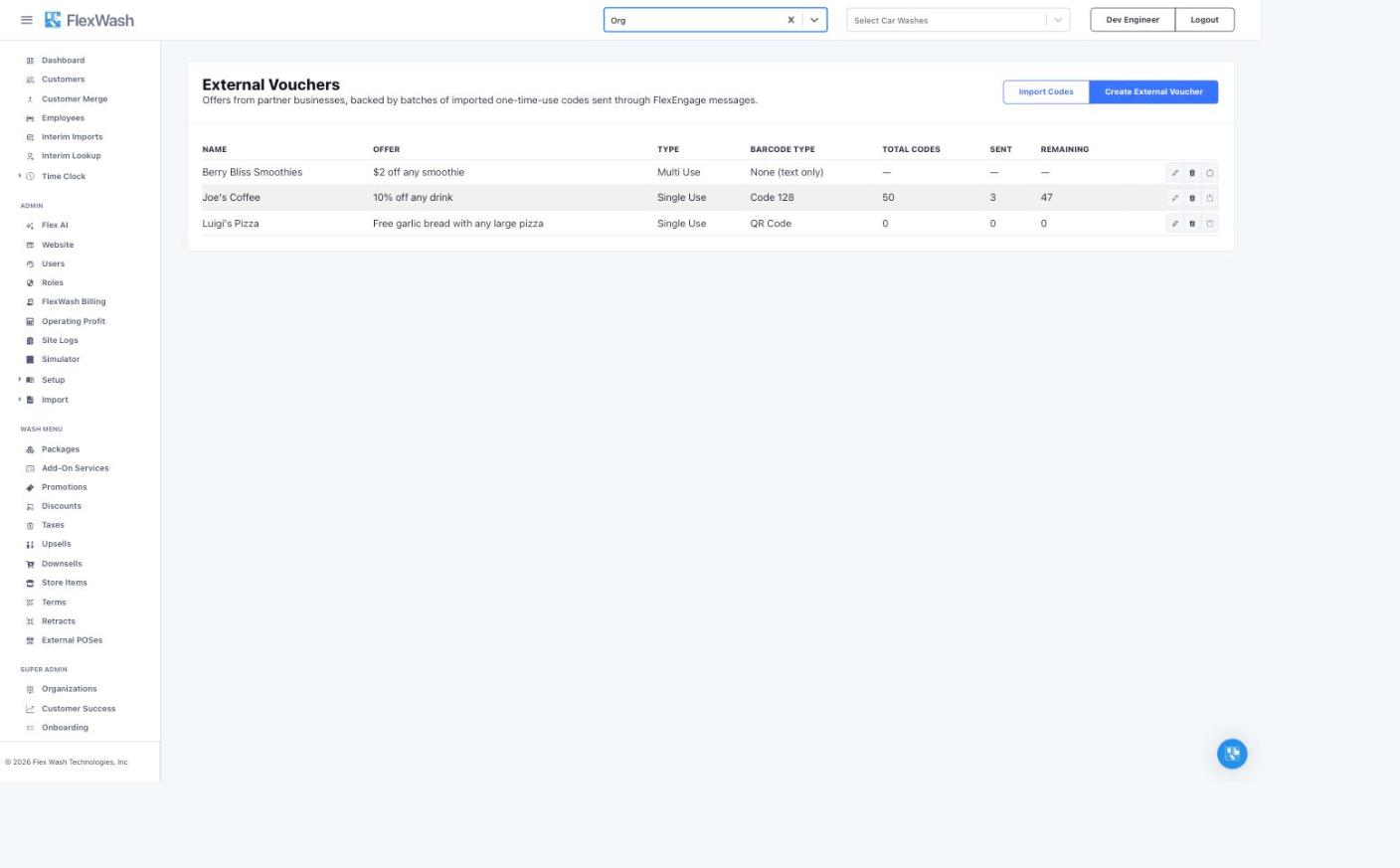
Voucher Types
Single Use
Backed by a batch of one-time-use codes supplied by the partner business
and imported from a CSV.
Each recipient is assigned their own code at send time, so every code
redeems exactly once.
Multi Use
One shared code that every recipient receives, such as a store-wide
discount code the partner accepts repeatedly. No import needed. The
barcode is optional; without one the voucher page shows the code as plain
text.
The voucher type cannot be changed after creation. If you need to switch a
partner offer from a shared code to unique codes, create a new voucher.
Creating a Voucher
Open FlexEngage -> External Vouchers in the left navigation and click Create External Voucher. You need at least the Admin role to manage external vouchers.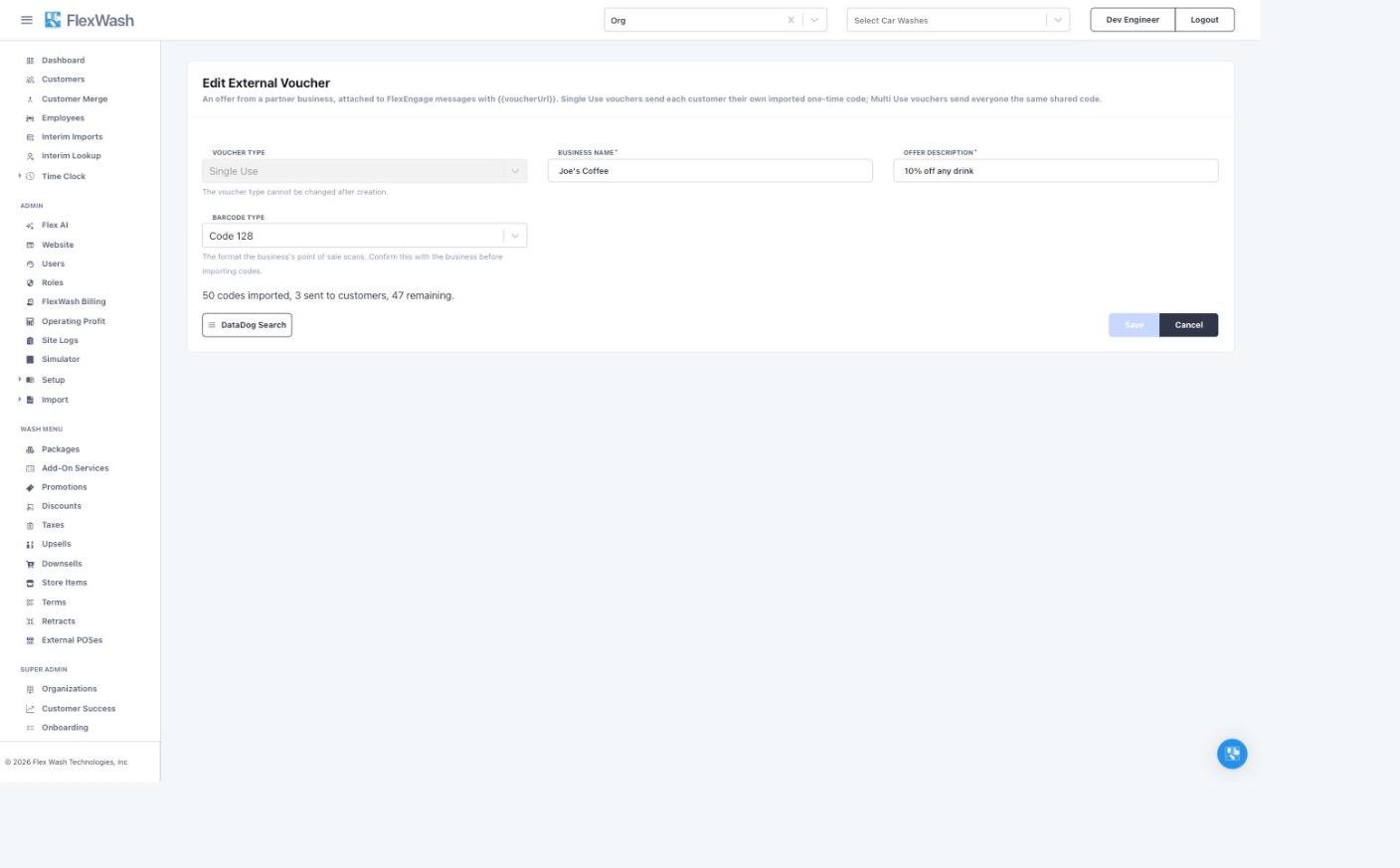
1
Name the offer
Enter the Business Name and an Offer Description (for example,
“10% off any drink”). Both appear on the voucher page the customer
presents at the partner business.
2
Choose the voucher type
Select Single Use for imported one-time codes or Multi Use for a
shared code. Multi Use vouchers also require the Shared Code itself.
3
Set the barcode type
Choose the format the partner’s point of sale scans: Code 39,
Code 128, or QR Code. For Multi Use vouchers the barcode is
optional; leave it empty to show the code as plain text.
4
Import codes (Single Use only)
Load the partner’s code batch through the
Voucher Code Import. The
voucher’s detail page and the master list show how many codes are
imported, sent, and remaining.
Attaching a Voucher to a Message
External vouchers work in both Scheduled Blasts and Smart Messaging, on the SMS and email channels. In the Delivery Channels card, pick the voucher in the External Voucher dropdown, then insert the Voucher URL variable into your message. The dropdown shows how many codes each Single Use voucher has left.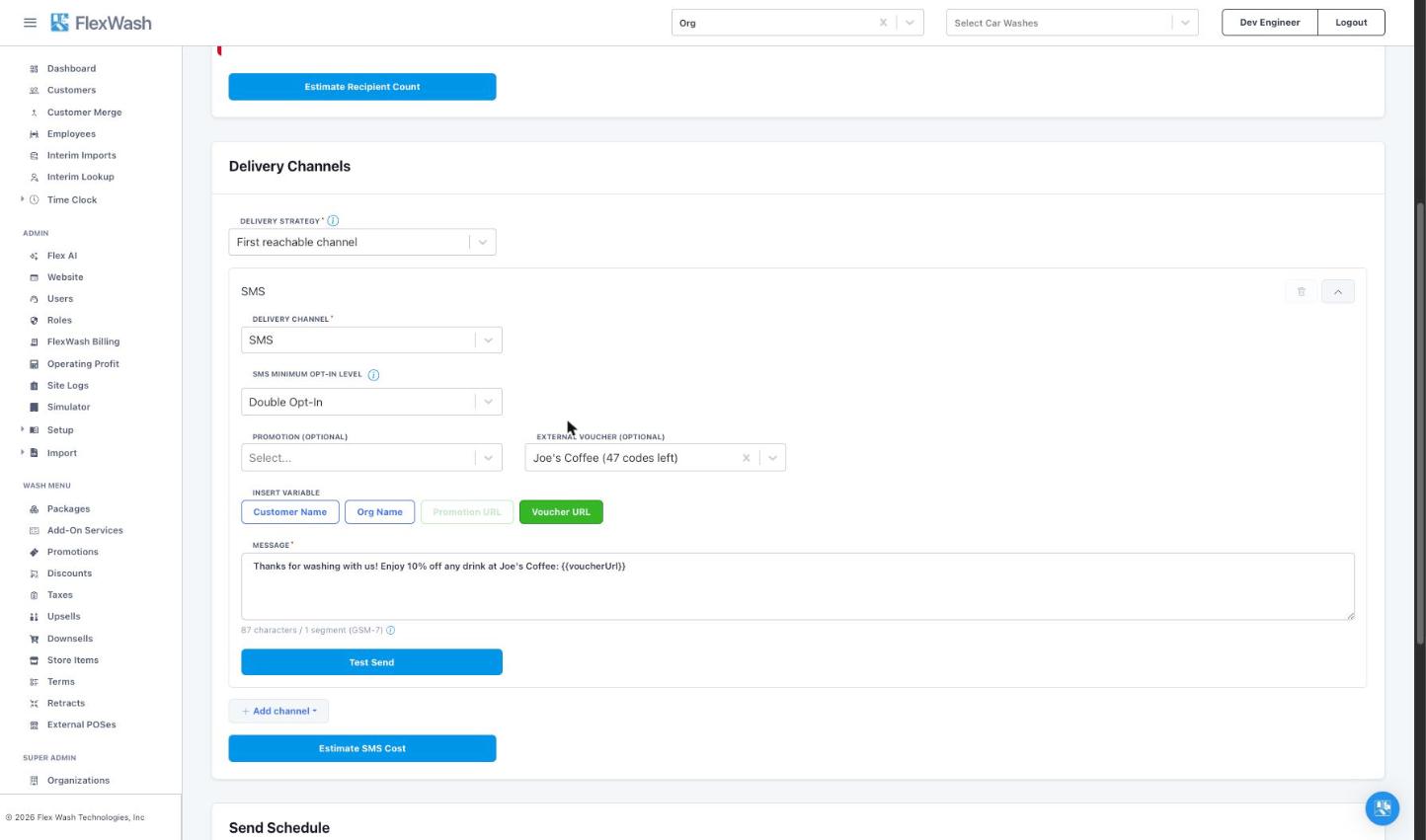
{{voucherUrl}} with a link that is unique
to each recipient:
- Single Use: each customer is assigned their own code from the imported pool. Codes are handed out oldest import first. A customer who receives the same voucher on both SMS and email in one blast gets one code, not two.
- Multi Use: every customer’s link opens the same shared code.
What the Customer Sees
The link opens a public voucher page with the partner’s business name, the offer, and the code rendered in the barcode format you configured. The customer presents it at the partner business, which scans it like any of its own coupons.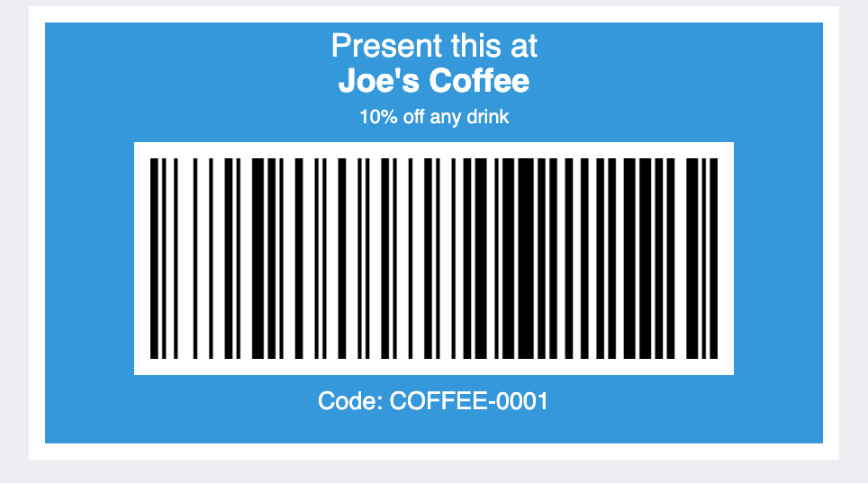
Code Pool Behavior
Single Use vouchers draw from a finite pool, and FlexEngage protects you from overdrawing it:- A scheduled blast claims all of its codes up front, before anything sends. If the pool cannot cover every recipient, the blast fails without sending and without consuming a single code. Import more codes and try again.
- A smart message claims one code per triggered send, only after the message passes its sendability checks, so skipped sends never consume codes.
- Track the pool from the External Vouchers list: Total Codes, Sent, and Remaining columns update as codes are claimed.